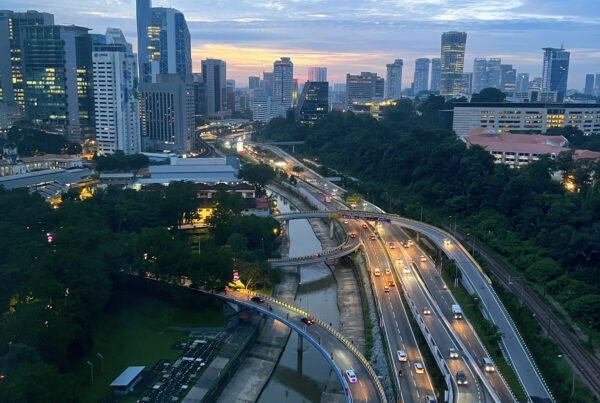
Singapore will remove several of its live traffic video feeds and electronic road sign boards amid its transition to the Electronic Road Pricing 2 (ERP 2) policy.
What is ERP?
ERP is an electronic system used by Singapore’s Land Transport Authority (LTA) to regulate and manage traffic and road congestion. Gantries are placed across Singapore where drivers incur charges as they drive through during operational hours. This encourages drivers to use different roads, travel during off-hours, or forego driving and opt to use public transportation instead.
According to the LTA’s official website, ERP rates are based on vehicle size, hour of passing through the gantry, and other traffic conditions. Adjustments are made twice a year, during school holiday periods in June and December.
Drivers are exempt from ERP during Sundays and all public holidays such as New Year’s Day or Hari Raya Pusa, for example.
Switching to ERP 2
The ERP has been used by Singapore since 1998. In March 2026, the LTA announced that it would upgrade the system to ERP 2. According to the organisation, the ERP 2 will be based on a Global Navigation Satellite System (GNSS).
One of ERP 2’s new features include payments via On-Boarding Units (OBU) for both cars and motorcycles and smartphone-OBU pairing for a “simplified registration process.”
Removal of live video feeds and signboards
As the new ERP 2 system will be integrated into OBUs, the LTA will send congestion and traffic alerts straight into dashboards. Singapore’s motorists must install the ERP 2 OBU in their vehicles by 1 Jan 2027.
“LTA will provide key traffic information directly through the OBU, in addition to other traffic information platforms,” said a spokesperson from the LTA.
According to The Straits Times, only two checkpoints will continue to have live video feeds; Woodlands and Tuas, and Sentosa Gateway. Starting last 1 May, the LTA removed its video feeds from its platform, OneMotoring. The authority told the Straits Times that the video feeds are of “relatively low utilisation.”
Did you find this article interesting? Click the ‘heart’ button above to give it a ‘like’!