Last 9 July, auto giant Mitsubishi announced that it would begin using humanoid robots in its automotive factories by next year.
The robot race
Mitsubishi Motors will take the next step in progressing its production technology by adopting humanoid robots. Investing in Highlanders, Inc., the company has also partnered with the robotics startup in creating a mutually beneficial arrangement.
Mitsubishi will transition its existing facilities to “next-generation smart factories” using Highlanders’ technology while the latter takes advantage of the carmaker’s manufacturing expertise and capabilities. Smart factories refer to production facilities equipped with AI, robots, and “human-machine collaboration.”
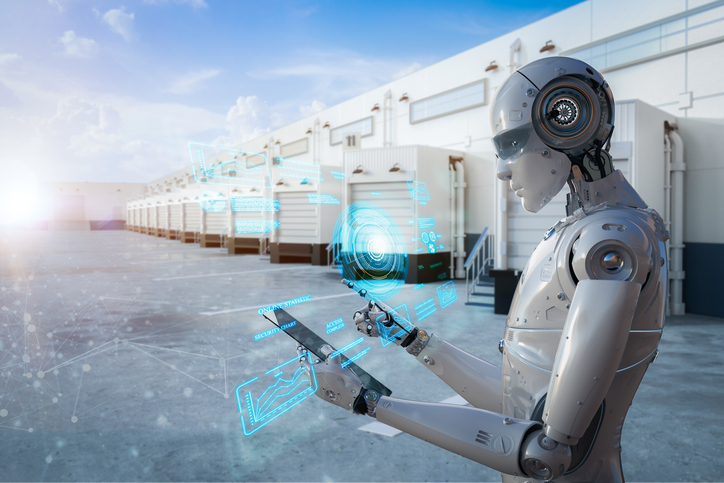
Mitsubishi unveiled its robots to the media in its Tokyo office earlier this month. The bipedal robot stood at 1.75 metres tall and is integrated with physical AI. The installed AI allows the robot to scan and assess its surroundings as well as use its hands to pick up objects. The robot is powered by a graphics processing unit created by Nvidia Corp while the rest of its body was created by Japan.
In addition to performing simple manual tasks, the robots will collect operational data on behalf of Mitsubishi to improve and refine future processes.
According to Mitsubishi’s announcement, the company will allocate one of its production lines at its Kyoto plant for the robots’ deployment. The Kyoto plant has the manufacturing capability of 1,000 units per month and established quality management protocols that will aid in the refinement of the new robot-integrated production process.
Humans or humanoids?
As Japan grapples with decreasing birth rates and consequent labour shortages, the automotive industry foresees a decline in employment in the coming future.
Takao Kato, Mitsubishi Motors’ Chairman and CEO, highlighted robots as a solution for the impending labour shortage. The use of humanoid robots may also address issues such as increasing physical demand from human workers as well as production complexity and flexibility. These robots may support organisational goals such as production and operational efficiency and resilience.
As the industry is only in the burgeoning stages of adapting robotic manufacturing, it may be a while before Japan sees a complete transition to AI or tech-exclusive production.
Did you find this article interesting? Click the ‘heart’ button above to give it a ‘like’!