
Thailand will introduce revised tax incentives for manufacturers of plug-in hybrid electric vehicles (PHEV). The revised excise taxes will be effective in 2026 and overhauls an existing tax policy for PHEVs.
NEW STRUCTURE
The announcement for the revision of the PHEV fiscal policy was published earlier in March this year. The approval for the revision was only recently announced, shifting their strategy in revamping auto production. Only vehicles produced locally may benefit from tax incentives.
While policymakers have discussed trade-in schemes and incentives for EV manufacturers, PHEVs face a new range-based policy. PHEVs with a range of 80 kilometres or more receive a slashed tax rate of 5 per cent. Hybrid vehicles with a range of less than 80 kilometres are taxed by 10 per cent.
Previously, the basis of the tax incentive was the fuel tank capacity of 45 litres. This shift allows for “more flexible vehicle design, improves usability in infrastructure-limited regions, and emphasises real-world emissions over nominal hybrid compliance.”
Another new revision is a tier-based system, wherein vehicles with bigger batteries and higher energy density benefit from slashed tax rates. This aspect of the revision is meant to support Thailand’s goal of complete electrification as part of the “30@30” strategy. Policymakers are keen on PHEVs becoming the stepping stone for citizens to adopt full electric vehicles.
A POSSIBLE SOLUTION
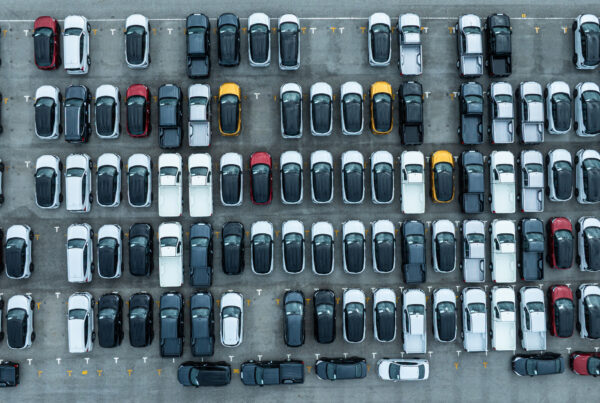
The current state of the kingdom’s auto market has been in decline since after the pandemic. The worst of the market’s performance occurred in 2024, when target figures were revised twice. Though there have been recent improvements in sales and production, the Federation of Thai Industries (FTI) Auto Club spokesperson Surapong Paisitpatanapong predicted that auto manufacturing could miss the year-end target.
Furthermore, findings from the Kasikorn Research Centre suggest only 565,000 vehicles sold for 2025 and predicted the closure of 50 dealerships for the rest of the year. Both manufacturers and auto dealers face significant pressure to make ends meet, as operating costs rise and demand slows. Among manufacturers, experts expect Chinese auto makers to thrive while Japanese, Western, and Korean brands may suffer the worst of Thailand’s performance.
The auto sector’s poor performance can be traced to Thailand’s economic situation and high household debt. With debt increasing, financial institutions have become more stringent in approving loans, especially for cars.
While debt soars nationwide, the FTI is also wary of upcoming 36 per cent tariff rate imposed by the United States. The result and implementation of these tariffs may make or break Thailand’s auto export performance.
Was this article informative? Leave us a like to let us know!