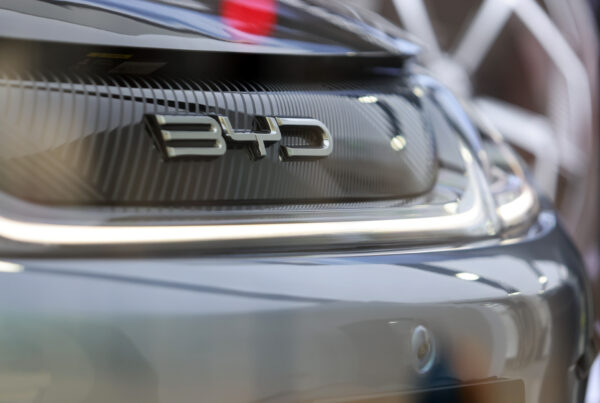

Honda urged the Thai government to review and reduce import taxes on completely built-up (CBU) vehicles.
Call for reduction
Honda Automobile Thailand Co Ltd. President and CEO Koji Iwanami called for the Thai government to reduce import duties on vehicles assembled abroad. Presently, CBU vehicles imported from Japan, Europe, and the US are taxed up to 80 per cent, unlike electric vehicles (EVs) and range extended EVs (REEVs) from other countries which are exempt from import duties.
According to Iwanami, competition in Thailand’s automotive market is not even. He clarified that while he is not asking for import duty exemption across the board, he is urging to government to review and reduce its current rates. He added that lowering taxes would not result in a loss of jobs or affect Honda’s relationships with suppliers.
Honda currently depends on CBU imports for several of its models. Its plant in Thailand’s Prachin Buri region has reached full capacity and is set to close. Additionally, its Ayutthaya plant was closed for vehicle production and converted into a parts manufacturing facility.
The Japanese car maker is keen to import its popular models such as the Honda FREED, Jazz, and STEP WGN. If import duties are lowered, Thai consumers will be able to purchase these models locally.
Walking and talking
As part of the Japanese Chamber of Commerce, Honda and five other Japanese car makers plan to engage in discussions with the Thai government on “eight main issues.” One of the most important issues to be discussed is the excise tax applied to hybrid electric vehicles.
According to current policy, the Thai government has increased its required local parts content requirement as criteria for tax reductions. While Honda is willing to comply with the requirement, it is also requesting the affecting period to be readjusted to align with new-model launch cycles.
If the updated policy does not align with the timing of Honda’s life cycle, hybrid vehicle prices could rise significantly. Thai buyers will have to bear the burden of the price increase while the country faces high household debt.
Did you find this article interesting? Click the “heart” button above to give it a like!