
Singapore’s Ministry for Home Affairs (MHA) and Ministry of Transport (MOT) are evaluating a potential policy to introduce separate license plates for electric vehicles (EVs).
DISTINGUISHING AND EXTINGUISHING
Second Minister for Home Affairs and Minister for Law Edwin Tong announced in late February that the MHA and MOT are studying the possibility of assigning differentiated license plates for EVs.
The announcement was made during the Committee of Law Supply debate last 27 February, where Tong explained that the study for the differentiated license plates aims to address EV fire safety risks.
“While research has shown that fires in EVs are less likely than in internal combustion engine vehicles, EVs pose different risks when they catch fire, and require a different management approach,” he added.
According to Singapore’s Land Transport Authority and Singapore Civil Defence Force (SCDF), they will also be asking for input from EV owners and the automotive industry regarding the license plate proposal.
“The proposed EV identifier (EVI) designs must ensure visibility and ease of identification. There will only be one common EVI design for EVs and plug-in hybrid vehicles. More details on the final design and implementation process will be provided in due course,” said the SCDF.
The study was first made public in 2024 by then-Transport Minister Chee Hong Tat. Chee addressed a concern from parliament member Melvin Yong about how first responders may be able to identify an EV during a potential fire. At the time, Chee responded that the study was being conduct by the MoT and MHA but with the addition of the SCDF.
“We will continue to work with our partner agencies and the industry to ensure that vehicle electrification proceeds safely,” Chee said.
Yong reportedly told The Strait Times that Singapore’s first responders and firefighters have been trained to specifically handle EV-related fires. EVs are powered by high-voltage batteries, which require specific techniques of extinguishing fires instead of water. Furthermore, if these batteries were to catch on fire, they may emit toxic fumes that may endanger first responders.
LOW LIKELIHOOD
In Singapore, incidents of EV-related fires have remained low. The Strait Times reported that from 2021 to 2023, there have only been 4 EV-related fire incidents; one in 2021, two in 2022, and another two incidents in 2023. The number dipped back to 1 incident in 2024 but rose to four in 2025.
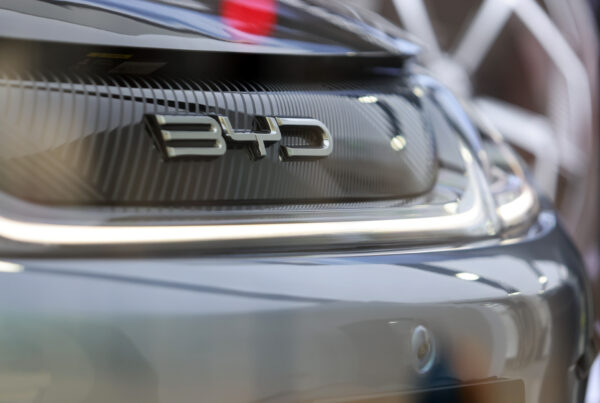
The use of EVs is steadily increasing in Singapore, with BYD leading the passenger car market for two consecutive years. The increase in EV adoption may be the reason for the rise in EV-related fires, though, the number of occurrences remains low.
Did you find this article interesting? Click the ‘heart’ button above to give it a ‘like’!