The Thailand Board of Investment (BOI) has announced THB 137 billion (AUD $5.9 billion) in investment commitments to strengthen the country’s electric vehicle (EV) industry.
Major investment boost
According to the BOI, the billion-baht investment will fund 198 projects across the local EV supply chain. This investment includes battery electric vehicles (BEVs), plug-in hybrid electric vehicles (PHEVs), battery manufacturing, EV parts and components, and charging infrastructure.
In contrast to its Southeast Asian neighbours, Thailand’s approach to EV manufacturing encompasses different types of electric vehicles, such as Bevs, PHEVs, and HEVs. The investment will fund 18 BEV projects, seven PHEV projects and a number of HEV projects, with a combined value of AUD $408 million. Additionally, the BOI approved 57 battery storage projects and 49 key component projects valued at AUD $542 million, as well as 42 charging infrastructure projects valued at AUD $424 million.
This strategy proved to be beneficial as more foreign carmakers continue to establish production hubs in Southeast Asia. Furthermore, the impact of the country’s heavy investment in the EV industry has changed the landscape of its local automotive market. EVs comprised over 40 per cent of new vehicle sales in2025, with hybrids accounting for 21.8 per cent and BEVs at 19.6 per cent.
“We must choose to be builders, not just consumers,” said Narit Therdsteerasukdi, Secretary General of the BOI and Secretary of Thailand’s National EV Policy Board. “By supporting all technologies—hybrid, plug-in hybrid, and battery electric—we allow legacy players and new entrants to invest and grow together, elevating Thai suppliers into the global value chain.”
Local production boom
Local EV production in Thailand has has grown rapidly over the past five years. Mercedes-Benz was the first to bring its BEV production to Thailand in 2022. This was followed by a number of Chinese EV makers including BYD, Great Wall Motor, SAIC Motor and Aion, in 2024. Auto brands such as Geely and Chery are also planning to establish production in the country. In early 2025, Japan’s Mazda invested AUD $234 million (THB 5 billion) into Thai EV production.
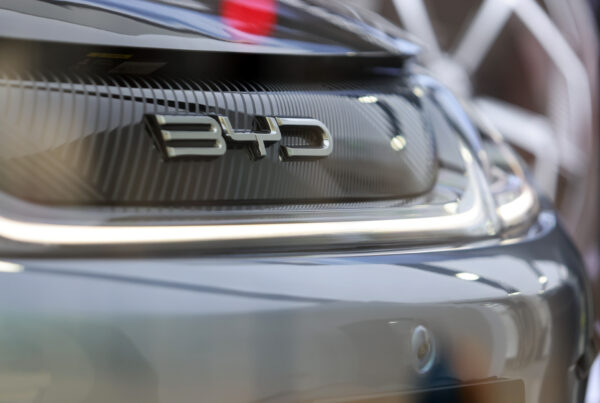
Among the Chinese EV makers in Thailand, BYD has taken the lead, having produced its 70,000th vehicle in late 2025.
The Thai government has provided manufacturers with incentives for low-emission vehicle production, with a revised structure for PHEVs released in 2025. The government have also urged EV makers to produce key components within the country by this year.
Did you find this article interesting? Click the ‘heart’ button above to give it a ‘like’!