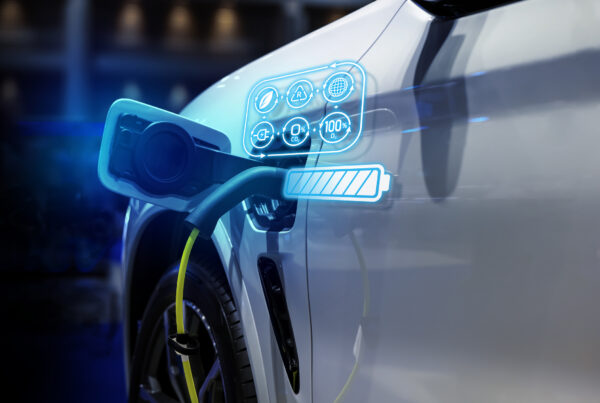

Singapore extended its financial incentives for electric vehicles (EV) up to 31 December 2026. Both the Vehicular Emissions Scheme (VES) and EV Early Adoption Incentive (EEAI) were extended and revised to encourage the use of lower emissions vehicles.
PROGRAM EXTENSIONS
The Land Transport Authority (LTA) and National Environment Agency (NEA) released a joint news statement on the 8th of September announcing the extension of the VES and EEAI programs. Both programs were extended “to support Singapore’s vision of 100% cleaner-energy vehicles by 2040.” Hence, the 1-year extension will end on the 31st of December 2026.
Though both programs were extended and revised, both government bodies ruled that only EVs will continue to receive rebates. Hybrid vehicles, on the other hand, will cease to receive rebates while ICE vehicles will be charged with higher surcharges.
“Owners who register electric cars and taxis in 2026 will receive a rebate of 45% off the Additional Registration Fee (ARF) capped at $7,500, down from $15,000,” wrote the NEA. “With the revised EEAI and VES, buyers will receive combined cost savings of up to $30,000 and $20,000 off the ARF for electric cars registered in 2026 and 2027, respectively. The $0 ARF floor for electric cars and taxis will also be maintained till 31 December 2027.”
RISE OF EVs IN SINGAPORE
Notably, Singapore’s EV sales rose significantly in 2025. By the end of 2024, BYD’s sales in Singapore jumped by 337 per cent year-on-year, overtaking auto giant Toyota. Furthermore, in Q1 of 2025 alone, newly registered EVs increased by 40 per cent. Of these new EV registrations, BYD emerged as the leading brand. From January to August this year, 80 per cent of new vehicle registrations were hybrids and EVs.
The NEA’s press release stated that the benefits for low-emission vehicles will indirectly follow the trend of BEV adoption. “The overall benefits will continue to be tapered as Singapore gets closer to 100% cleaner energy vehicles by 2040, in support of our national target to achieve net-zero emissions by 2050,” it said.
Did you find this article interesting? Click the ‘heart’ button above to give it a ‘like’!