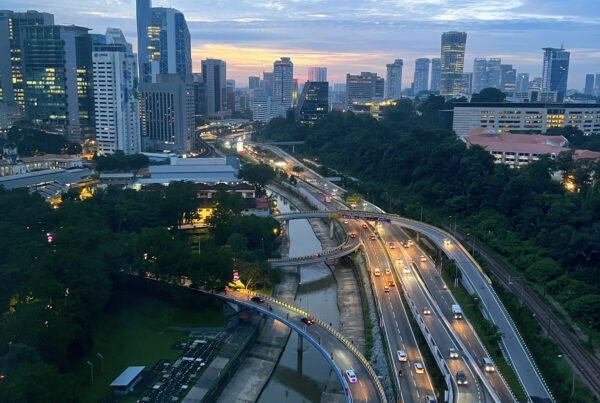

Singapore has cut its Preferential Additional Registration Fee rebates (PARF) this year, sending waves of concern through its auto industry.
PARF REBATES
While Certificate of Entitlement (COE) premiums remain unchanged, the LTA introduced a large cut of 45 percentage points to PARF rebates. The maximum has been lowered to SGD 30,000 ($33,381 AUD) from SGD 60,000 ( $66,763 AUD).
According to Prime Minister Lawrence Wong, the rise in low-emission vehicles may lead to “less need to incentivise early deregistration.”
Preferential Additional Registration Fee, or PARF, allows consumers to enjoy reduced rates on succeeding registration fees and COE fees when they de-register their ICE vehicles before the expiry of their COEs.
According to the LTA website, “the younger your car or taxi is when you deregister it, the more PARF rebate you will enjoy.”
PARF’s calculation is based on a vehicle’s Additional Registration Fee (ARF), a tax that depends on a vehicle’s open market value (OMV). Models are divided into tiers wherein expensive cars are taxed higher. Due to the cut in PARF rebates, these expensive vehicles will depreciate at a higher rate compared to more affordable vehicles.
CHANGES AND CONSEQUENCES
The cut in PARF rebates began on 20 February. While its effects may not be immediate, industry players are concerned with its effects in the near future.
“We will only see the effects of the PARF change in the next few auctions as buyers and dealers have a chance to respond,” an industry expert told Channel News Asia.
According to a Business Times article, the change in rebates may favour new energy vehicle (NEV) brands from China and stunt legacy companies. The article expressed concern from Singapore’s automotive industry, stating that “smaller legacy players may exit the market entirely.”
“The real test will come after these existing (orders) are cleared,” said Jake Ler, an executive from Motorist Singapore. “If order books start to thin out, we may then see some downward pressure on COE premiums in subsequent rounds.”
The cut in PARF rebates could allow affordably priced Chinese NEVs to depreciate at a lesser rate compared to its pricier competitors. In this case, Chinese NEV brands will be able to sustain low OMVs and keep costs low while boosting performance in Singapore. Furthermore, final pricing on NEVs may attract more customers due to further rebates on electric vehicles.
On the other hand, legacy players which typically have vehicles with higher OMVs may face rising costs. This is especially true for luxury car brands such as BMW and Mercedes-Benz. Luxury car brand performance in Singapore has significantly suffered since 2024, when BYD began its rise in the market.
Industry experts expect a higher volume of COEs to come in, but the cost of car ownership will also increase.
Did you find this article interesting? Click the ‘heart’ button above to give it a ‘like’!