
Singapore recently announced that it will cease registrations of new internal combustion engine (ICE) vehicles by the year 2030. This transition is part of the Singapore Green Plan 2030 . A key objective of this roadmap is a total phase-out of petrol-powered vehicles by the year 2040, progressing towards cleaner energy consumption.
EVs IN SINGAPORE
Sales of electric vehicles (EV) are hitting the island nation in waves. Just last August, Singapore hit a new record in EV sales with a total of 7,796 new registrations for the month alone. In comparison to 2024’s overall total of 7,772 of new EV registrations, August’s record alone is a staggering improvement. As of now, the total number of EVs in the country is 39,800, 12,000 units more than 2024’s tally of 26,200.
This rise in EVs is largely helped by several programs from Singapore’s Land Transport Authority (LTA). Presently, the most prominent of these programs is the EV Early Adoption Incentive or EEAI. Under this scheme, vehicle owners receive a 45% rebate on their Additional Registration Fee (ARF), capped depending on when they register their vehicles. Vehicles registered from 1 January 2024 to 31 December 2025 receive a rebate capped at SGD 15,000 (AUD 17,579), while rebates for vehicles registered starting 1 January 2026 to 31 December 2026 are capped at SGD 7,500 (AUD 8,789).
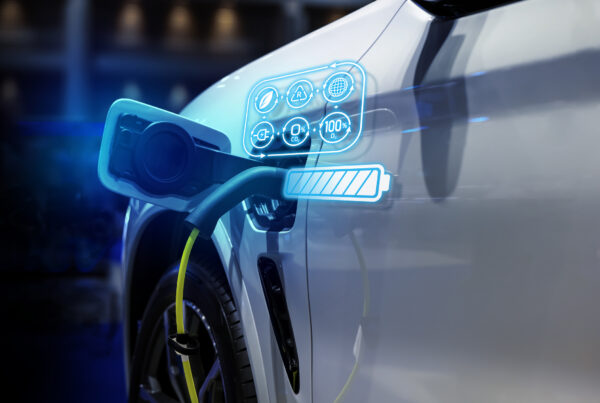
EEAI and the rest of LTA’s programs were created to help Singapore progress towards greener transport. In support of the EV transition, the LTA revealed that there are currently 24,000 EV charging ports installed in the country. The country is almost halfway to its goal of 60,000 charging ports installed by 2030. However, further evaluation of the city’s infrastructure is still ongoing for the installation of the remaining 36,000 ports.
GROWING CONCERNS
With petrol vehicles on their way out, auto experts and fans alike are questioning this government decision. The availability and practicality of fast-charging stations, the disruption of the petrol industry, and the use of ICE vehicles for emergency services were among the concerns raised.
An article by Channel News Asia (CNA) highlighted the concerns of Singapore experts such as Professor Lawrence Loh, director of the Centre for Government and Sustainability from the National University of Singapore (NUS) Business School. According to Professor Loh, Singapore’s petrol stations are “at a crossroads” regarding the petrol-free future ahead.
“If one day, many (petrol station sites) are given up by the (petrol) companies, there might be certain thinking about putting them to more optimal use, the same way we are looking at converting land like golf courses to better use,” he explained.
According to CNA, however, Singapore’s petrol stations are adapting to the fuel-free environment of the near future by providing “a more diverse range of non-fuel retail services.”
Did you find this article interesting? Click the ‘heart’ button above to give it a ‘like’!