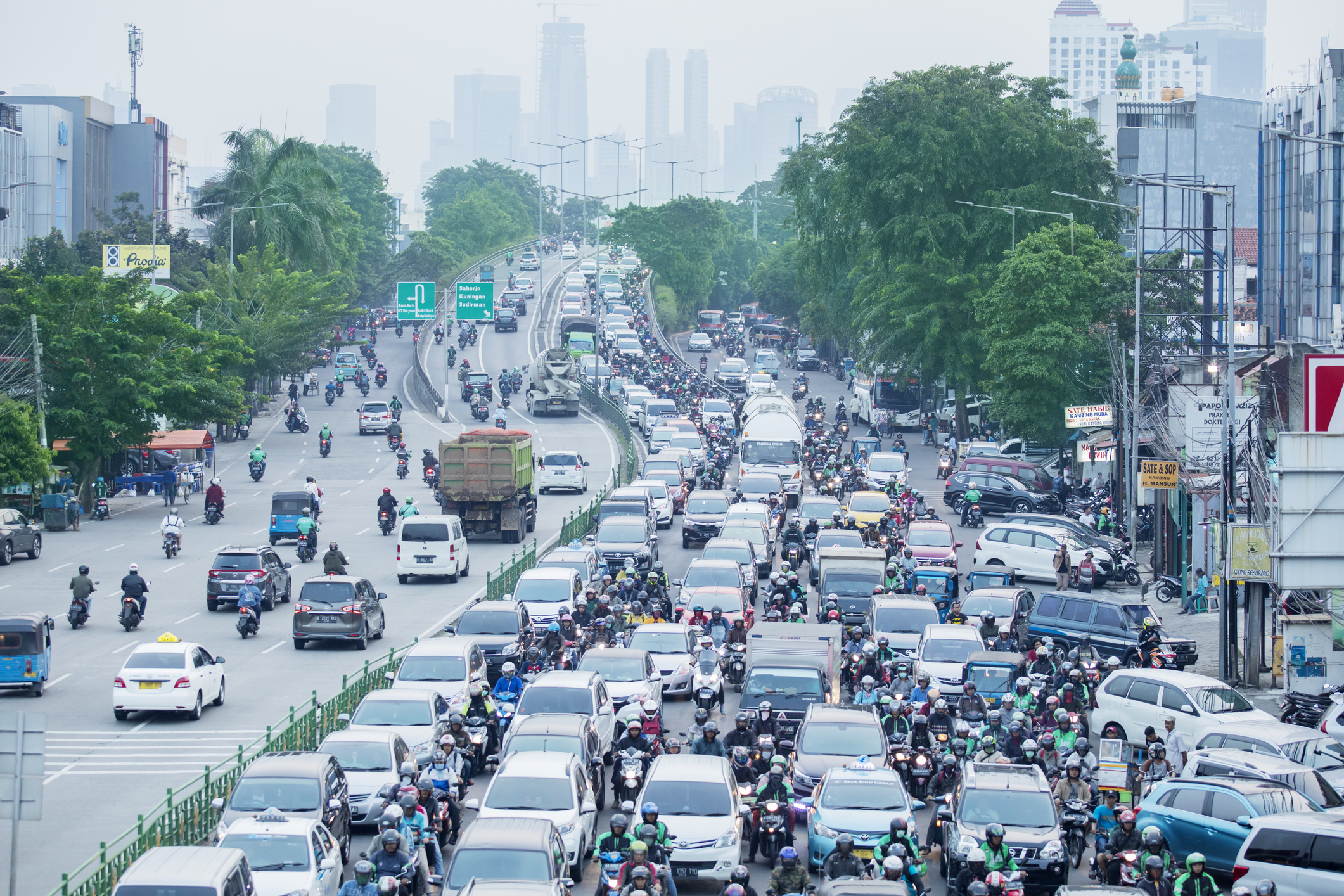
Indonesia’s car market performance remains sluggish for the first half of 2025. Both retail and wholesale cumulative figures fell year-on-year, by 9.7 and 8.6 per cent respectively.
SALES FIGURES
Overall vehicle sales tumbled for January to June 2025. Wholesale vehicle sales amounted to 374,740 units—this figure represents vehicles delivered from factories to dealerships. While retail sales, representing customer purchases at dealerships, reached 390,467 units for the same period.
By category, 4×2 vehicles with internal combustion engines (ICE) performed best with 218,639 vehicles sold. “Affordable energy saving cars” with a 4×2 drive followed, selling 67,887 vehicles. Nest, pick-up trucks followed suit with sales of 27,980 units, while 13,120 units of 4×4 vehicles were sold. Sedan vehicles and buses sold the least with 2,685 and 2,416 units sold respectively.
In terms of brands in retail sales, Toyota remained on top, acquiring 32.5 per cent market share. The auto giant sold 128,893 vehicles in total from January to June. Its subsidiary, Daihatsu, came in second with 66,716 vehicles sold and 17.1 per cent market share acquired.
Honda came in third place with a wide gap, selling 39,193 vehicles. The company acquired exactly 10 per cent of Indonesia’s auto market share. Mitsubishi Motors followed behind with a 7,000 gap, selling 32,445 vehicles for the same period and acquiring 8.3 per cent market share.
Suzuki rounded out the top 5 with a total of 27,769 of its vehicles sold. It acquired 7.1 per cent of the market share, more than double of BYD’s. The EV maker sold a total of 13,705 vehicles for the first half of 2025, with 3.5 per cent market share. Its luxury subsidiary Denza, whose sales started in February, sold 5,093 vehicles in total since.
Mitsubishi Fuso, a commercial vehicle subsidiary of Mitsubishi motors, took the top 7th spot. The truck manufacturer sold 11,640 units from January to June and acquired exactly 3 per cent market share. Hyundai performed similarly, with 11,583 vehicles sold and acquiring 3 per cent market share as well.
At the 9th spot is Isuzu, with 11,294 vehicles sold and 2.9 market share acquired. At last place is Hino, with 10,301 units sold. The commercial vehicle maker acquired 2.6 of Indonesia’s total auto market share.
THE CAUSE BEHIND THE FALL
Indonesia’s auto market performance is closely monitored by the Association of Indonesian Automotive Manufacturers, otherwise known as GAIKINDO. According to the association, Indonesia’s current economic challenges may be one of the root causes of its slowing vehicle sales. Furthermore, rising interest rates in combination with the current economy provide cause for weakening purchasing power amongst consumers.
GAIKINDO hopes that its upcoming motor show will stimulate the market and encourage vehicle purchases. “We hope automotive exhibitions such as the GAIKINDO Indonesia International Auto Show [GIIAS] 2025, followed by Jakarta Auto Week and other regional auto shows, will help stimulate demand and boost overall sales,” said spokesperson Jongkie Sugiarto.
Was this article informative? Leave us a like to let us know!