Tech giant Xiaomi announced that it would introduce its region-exclusive cars to the global market by 2027. In its home country, the smartphone maker made its foray into the auto industry in 2023 with its EV subsidiary, Xiaomi Auto.
XIAOMI AND ITS LINEUP
Xiaomi Auto was established in 2021 by Lei Jun. The purpose of the subsidiary was to manufacture electric vehicles (EV) under the Xiaomi name. Showing significant progress and development for its auto arm, Xiaomi enlisted the talents of several Chinese tech and auto experts, including a former designer for BMW. By 2023, the company had amassed a large research and development team of more than 1,000 people to bring its EV ambitions to life. Later the same year, Xiaomi Auto announced that its first model, the SU7 was under development. Months later, on 28 March 2024, the SU7 officially debuted in Beijing, China.
Xiaomi Auto’s current line-up includes two models, the SU7 and the YU7, both with its own variants. The SU7 sedan line-up is made up of the SU7 Standard, Pro, Max, and Ultra; while the new YU7 SUV series includes the Standard, Pro, and Max. Both models are equipped with its native software, Xiaomi Hyper Autonomous Driving (HAD).
THE SU7 CONTROVERSY
Unfortunately for the company, the Xiamo HAD is embroiled in controversy after three people perished in a fatal crash. The victims used the vehicle’s “self-driving mode” on a highway in China’s Anhui province. After colliding with a construction zone, the SU7 caught fire. Reports suggest that the doors were locked, “preventing escape.” Xiaomi has since responded that all doors have an emergency handle. According to the tech giant, these handles are still functional if the car’s battery is damaged.
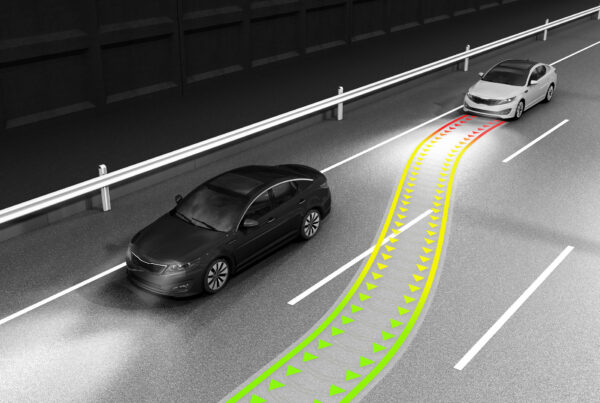
Since the incident, China has banned auto makers from remotely testing and updating their ADAS (Advanced Driver Assistance Systems) in customer cars without approval. After meeting with its industry leaders, China placed several rules for carmakers and its ADAS systems to abide by. First, all systems must be thoroughly tested and approved by authorities before vehicles are delivered. Second, autonomous driving features are now limited—eliminating advanced features such as automated parking, remote parking, and one-touch summoning. Third, all driving monitoring systems in China’s EVs always be enabled. Lastly, the use of the words “smart driving” and “autonomous driving” in marketing campaigns have also been banned.
Due to this safety controversy, the launch of Xiaomi’s “flagship SUV,” the YU7 was delayed from April to July.
HEADING INTO THE GLOBAL MARKET
Despite the SU7 tragedy and delay, the YU7 debuted with a whopping 200,000 pre-orders and 240,000 locked-in orders. Consequently, customers who ordered the YU7 must now wait over a year to receive their car. Unsurprisingly, the waiting period triggered mass complaints with the company pledging to “ramp up capacity.” Due to this, founder Lei Jun announced that the company will focus on fulfilling local demand in China before going global. He recommended excited but frustrated customers to opt for the Tesla Model Y or even the XPeng G7 if they find the wait too long.
Xiaomi currently rivals Tesla in China where the SU7 has been outselling Tesla’s Model 3 since December 2024. Both car makers, however, still fall behind EV giant BYD.
With the SU7 model performing poorly in the Q1 China automobile quality survey, Xiaomi’s quality and safety comes into question before debuting globally. “Knowing Xiaomi’s cars would be scrutinized by millions of netizens, that every flaw would be magnified 10-thousand-fold, we prioritized quality above all from day one,” Lei Jun told Yicai Global.
Xiaomi has the potential to transform the global EV market if its international debut pushes through by 2027. But first, they must build on consumer trust and comply abundantly with China’s stringent EV regulations and standards.
Was this article interesting? Leave us a like to let us know!