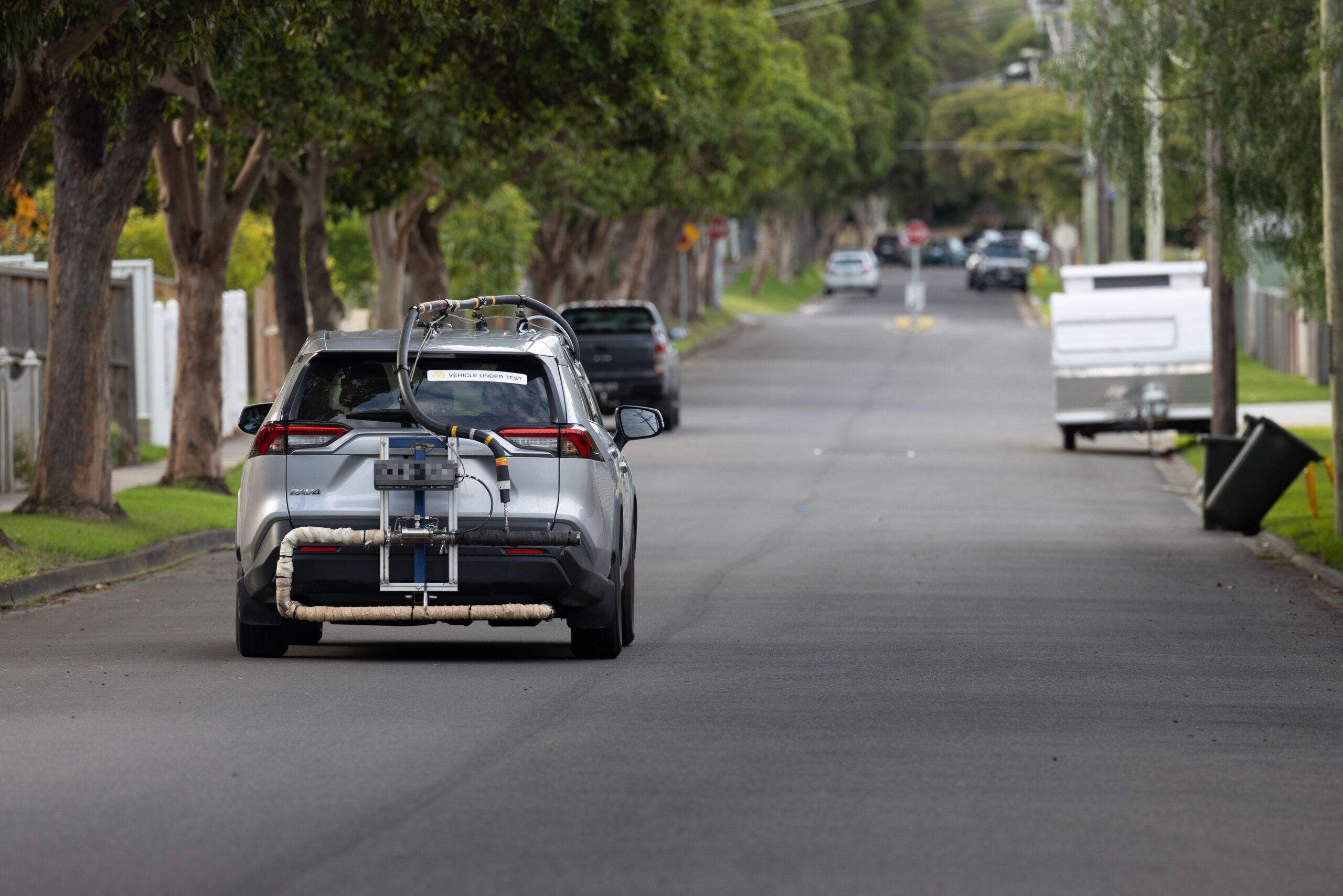
More than three-quarters of petrol, diesel and hybrid vehicles tested under the Australian Automobile Association’s (AAA) Real-World Testing Program have consumed more fuel in real-world driving than indicated by their official laboratory ratings, according to the latest results.
The findings are based on testing 163 internal combustion engines and hybrid vehicles. The program has also now assessed 20 battery electric vehicles, finding that none matched their advertised laboratory driving range under real-world conditions.
The AAA said the independent testing program provides consumers with transparent information about how vehicles perform on Australian roads while validating emissions reductions across the nation’s light vehicle fleet.
Majority of vehicles exceed advertised fuel consumption
Across the 163 petrol, diesel and hybrid vehicles tested so far, 76 per cent recorded higher real-world fuel consumption than their official laboratory figures.
While the latest round recorded relatively small differences, previous rounds found some vehicles exceeded their advertised fuel consumption by more than 30 per cent.
In the latest results, the Mazda BT-50 2WD diesel recorded the largest fuel consumption gap among the five vehicles assessed. Its real-world fuel use was recorded at 7.4L/100km. This is a 7 per cent difference from its advertised fuel use of 6.9L/100km.
Earlier testing identified larger differences for several models, including:
- Mazda 2
- Hyundai Kona Hybrid
- Suzuki Swift Hybrid
- GWM Jolion Hybrid
- Chery Omoda 5
EV range also falls short of laboratory figures
The AAA has now tested 20 electric vehicles under its Real-World Testing Program.
While none achieved their advertised laboratory driving range, the difference between laboratory and real-world performance varied considerably, ranging from 3 per cent to 31 per cent.
Among the latest vehicles assessed, the BYD Atto 3 Essential recorded the largest shortfall.
| Electric Vehicle | Advertised Range | Real-World Range | Difference |
| BYD Atto 3 Essential | 410km | 328km | -20% |
| Tesla Model Y Long Range | 600km | 559km | -7% |
The Tesla Model Y Long Range recorded the longest real-world driving range measured by the program to date at 559 kilometres.
Together with the Kia EV3 Air Long Range and Kia EV5 Air Long Range, it is one of only three electric vehicles tested so far to exceed 500 kilometres of real-world driving range.
Independent testing program
The AAA’s Real-World Testing Program was established following the Volkswagen emissions scandal, in which laboratory testing procedures were manipulated to understate emissions performance.
The program independently measures fuel consumption, energy use and emissions under real-world Australian driving conditions to provide consumers with additional information beyond laboratory test results.
According to the AAA, the testing also helps validate emissions reductions across Australia’s new light vehicle fleet while improving transparency around vehicle performance.
The Real-World Testing Program is administered by the Australian Automobile Association and funded by the Commonwealth Government.
Complete vehicle results are available through the AAA’s Real-World Testing Program website at realworld.org.au.
Did you find this article interesting? Click the ‘heart’ button above to give it a ‘like’!