
The Australian Energy Market Commission (AEMC) has released a draft rule to enable the rollout of electric vehicle (EV) charging infrastructure under the Commonwealth Government’s $40 million Accelerating EV Charging Program.
The program is designed to target regional charging blackspots and high-density urban areas where customers have limited access to off-street charging, including renters and apartment residents.
Up to 14,000 chargers targeted
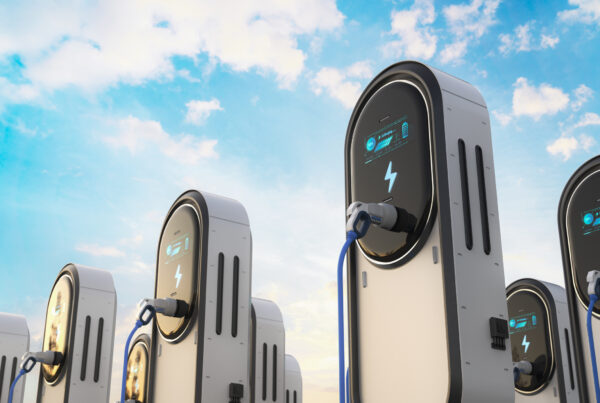
Under the proposed arrangements, participating electricity distributors would facilitate private charge point operators installing kerbside charging infrastructure in high-density areas through efficient connection and access requirements.
Charge point operators would have the first right of refusal to take up identified sites. Where operators do not take up a site, the participating distributor would become the provider of last resort and install an AC charger.
In regional charging blackspots, distributors would be required to provide DC chargers where their bids under the Commonwealth program are successful, helping ensure chargers are installed in locations that may otherwise be commercially less attractive.
The Commonwealth is expected to fund around 30 per cent of the cost of eligible infrastructure, with approximately 14,000 EV chargers targeted under the program.
The remaining 70 per cent would be recovered by participating electricity networks from consumers. The AEMC estimates this would add around $1 a year to a typical residential customer’s electricity bill for five years.
AEMC weighs consumer impacts
In assessing the draft rule, the AEMC considered the program’s expected emissions reductions alongside its impact on electricity bills, competition between charging providers and access to charging for people without off-street parking.
AEMC Chair Anna Collyer said the Commission considered the program’s targeted and time-limited nature when assessing its potential costs and benefits.
“Having weighed all factors, the Commission is satisfied the program’s likely benefits outweigh its costs to consumers, given its targeted and time-limited design,” Ms Collyer said.
She said the trial would also provide information for future decisions about EV charging infrastructure.
“Lessons learned from the trial program will inform future Commission decisions regarding EV infrastructure.”
Rule limited to Commonwealth program
The draft rule would apply only to charging infrastructure delivered under the specific Commonwealth program, which is scheduled to conclude on 30 June 2029.
Collyer said the proposed rule does not establish a broader role for electricity distribution networks in providing EV charging infrastructure.
“The Commonwealth’s program is a targeted measure to help close the gap between the rising EV uptake and EV charging infrastructure,” she said.
“The two will positively reinforce one another as the public continues to consider the transition to non-combustion vehicles.”
The AEMC said its broader work on the long-term role of electricity networks in EV charging is continuing separately.
Further EV charging reforms under consideration
Two other rule change requests relating to EV charging are being considered alongside the AEMC’s Electricity Network Regulation Review.
Energy Networks Australia has proposed changes to allow distributors to roll out kerbside EV charging infrastructure as a regulated service, while Nexa Advisory has proposed changes relating to competition and ring-fencing requirements and to improve consumer protections.
Submissions on the draft determination for the Accelerating EV Charging Program close on 5 November 2026, with a final determination expected by the end of 2026.
Did you find this article interesting? Click the ‘heart’ button above to give it a like!