
New real-world test results have shown that several popular electric vehicles (EVs) have less driving range than their official laboratory figures.
The tests, part of the Australian Automobile Association’s (AAA) Real-World Testing Program, compared five EV models’ actual performance to their manufacturer-advertised ranges. Results showed differences of between 5 per cent and 23 per cent under real driving conditions.
Real-World Results Reveal Gaps
The 2024 Smart #3 performed closest to its laboratory rating, achieving 432km, just 5 per cent less than its official figure. The 2022 Kia EV6 and 2024 Tesla Model Y each recorded 8% lower ranges in real-world driving, while the 2024 Tesla Model 3 fell short by 14 per cent, reaching 441km compared to its lab result of 513km.
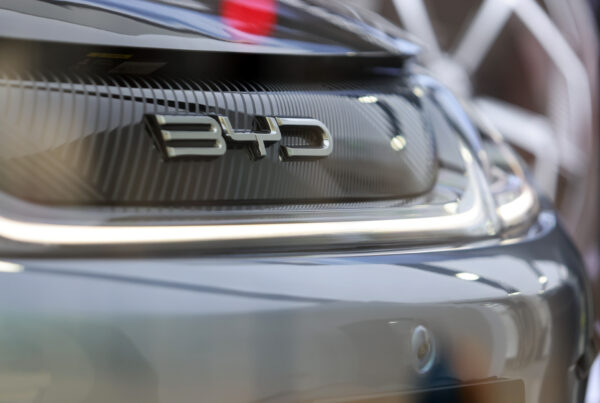
The largest gap was for the 2023 BYD Atto 3, with a 23 per cent lower range or 369km compared to 480km in laboratory testing.
AAA Managing Director Michael Bradley said the program helps provide independent information for consumers.
“As more EVs enter our market, our testing will help consumers understand which new market entrants measure up on battery range,” Mr Bradley said.
“Our Program will bring confidence to Australian fleets and families looking to buy an EV.”
The testing program began in 2023 with $14 million in federal funding and uses a 93km circuit in and around Geelong, Victoria. It follows strict protocols based on European regulations to ensure repeatable results and reduce the effect of human factors such as driving style or traffic changes.
Industry Says EVs Still More Than Capable
While the results showed some EVs perform below their advertised lab range, the Electric Vehicle Council (EVC) said they are still more than capable of meeting everyday needs.
EVC Head of Legal, Policy and Advocacy Aman Gaur said the average Australian drives only 33km per day, meaning that even an EV with a 350km range could go for more than 10 days before needing a recharge.
“These results give confidence that EVs have more than enough range for everyday Australians,” Mr Gaur said.
“All cars, including petrol and diesel cars, often present different results in the lab compared to real-world conditions. Laboratory testing occurs in controlled conditions while real-world driving throws in all sorts of variables such as traffic flows, hills, rough roads, weather, extra passenger or luggage weight, and the unique driving styles of motorists.”
Mr Gaur noted that manufacturers are required by law to advertise official laboratory test results, and that differences between lab and real-world figures are normal across all vehicle types.
Range Anxiety Still a Perceived Barrier
AAA research found that 60 per cent of potential EV buyers see range and recharging concerns as their biggest hesitation. However, Mr Gaur said public charging networks are growing and real-world range data is now more accessible.
“Once drivers make the switch, range anxiety quickly fades,” he said. “Just as they’re used to monitoring a fuel gauge, EV drivers quickly adapt to tracking battery levels and charging at home or on the go.”
The EVC also pointed out that the BYD Atto 3’s lab range figure was based on a different test method from the other vehicles. Under the same test standard, the variation would be around 12 per cent instead of 23 per cent.
Moving Towards Greater Transparency
The AAA’s Real-World Testing Program has also tested 114 petrol, diesel, and hybrid cars, finding that 77 per cent used more fuel than claimed and one in five exceeded noxious emissions limits.
“Unlike petrol and diesel cars which guzzle more fuel and pollute more than advertised, battery electric vehicles have zero tailpipe emissions and aren’t dependent on foreign-owned fossil fuels,” Mr Gaur said.
Mr Bradley said the program’s goal is to help Australians make informed vehicle choices.
“Consumers cannot always rely on a carmaker’s laboratory tests as an indicator of real-world performance,” he said.
Did you find this article interesting? Click the ‘heart’ button above to give it a ‘like’.