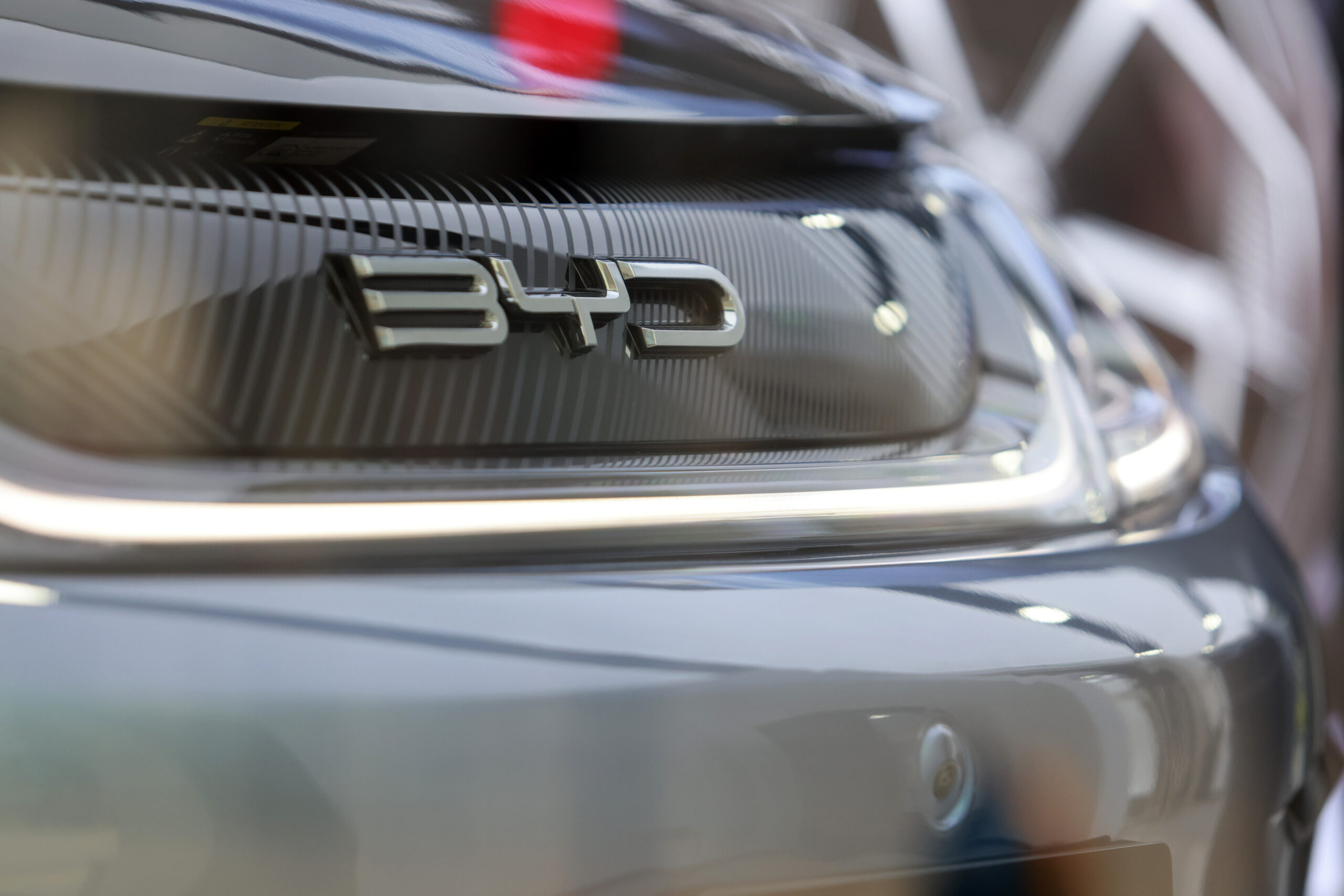
Chinese EV maker BYD is now the world’s number 1 EV maker, surpassing Tesla in annual sales and revenue. Meanwhile, Tesla’s decline in these categories also led to a decline of 0.4 per cent in its stock price.
BYD BECOMES NO. 1
BYD wrapped up 2025 with 4,602,436 new energy vehicles (NEV) sold worldwide, 7.73 per cent more than cumulative sales from 2024. The company’s year-end results are mixed; sales for December alone amounted to 420,398 units sold, 18.2 per cent lower year-over-year (YoY). December’s performance is only slightly better than November’s 26.5 decline in sales YoY.
On a positive note, 2,256,714 battery electric vehicles (BEV) were sold for 2025, 27.86 per cent more YoY.
Thanks to its aggressive expansion efforts, BYD’s overseas sales surpassed 1 million units sold in 2025. The carmaker exported 1.05 million units during the year, a massive 200 per cent increase compared to 2024.
Though BYD’s rapid expansion brought about higher annual sales, it is mostly due to the oversaturation of China’s domestic EV market. Current market conditions forced its manufacturers to maximise their presence in international markets with the ongoing EV price war in China forcing dealers to manage an oversupply of vehicles from multiple brands. Originally contained within China itself, the price war eventually reached other countries, including Thailand and Vietnam.
TESLA MISSES THE MARK
BYD’s main rival, Tesla, saw its annual sales drop to 1.64 million units sold, declining by almost 9 per cent YoY. This officially marks 2025 as Tesla’s second consecutive year of decline, Largely thanks to a 16 per cent drop in deliveries YoY in the last quarter of 2025.
Just before the year-end, Tesla publicly shared its vehicle delivery projection for Q4 2025, 422,850 units. BBC projected a better turn out with a prediction of 445,061 units delivered in Q4. Tesla’s actual results barely reached both projected figures. Tesla’s overall decline also led to a decrease in its stock price by 0.4 per cent, reaching USD 447.77 on the morning of 2 January.
According to the BBC, Tesla’s decline sales was influenced by the removal of a financial incentive created by former US President Biden’s administration. The incentive allowed American consumers to take advantage of a subsidy of up to USD 7,500 (AUD 11,243) on specific low-emission vehicles.
Did you find this article interesting? Click the ‘heart’ button above to give it a ‘like’!