
The seven-seat BYD M9 plug-in hybrid has received a five-star ANCAP safety rating, adding a new five-star option to the people mover segment.
The M9 recorded balanced results across ANCAP’s four Stages of Safety, including a score of 100 per cent score in the Post Crash assessment. The rating applies to seven-seat variants built from August 2026 onwards in Australia and New Zealand. Eight-seat variants remain unrated.
Under ANCAP’s 2026–2028 criteria, vehicles are assessed across Safe Driving, Crash Avoidance, Crash Protection and Post Crash, with the overall rating requiring balanced performance across the assessment areas.
Strong post-crash performance
The M9 achieved its highest result in the Post Crash assessment, recording 100 per cent.
The plug-in hybrid demonstrated effective battery voltage isolation and post-crash fire risk management, while meeting ANCAP requirements for emergency information provision.
The vehicle is equipped with eCall, multi-collision braking and hazard light activation following a crash. Interior and exterior door releases, seatbelt buckles and the tailgate remained operable after the assessed crash tests.
The M9 also demonstrated that its windows would remain functional for the required period if the vehicle entered water, supporting occupant escape.
Crash protection scores 89 per cent
The M9 recorded an 89 per cent score for Crash Protection, with strong performance across frontal, side and rear impact assessments.
Maximum scores were recorded for the driver, front passenger and child occupants in the frontal offset test, as well as for adult and child occupants in the side impact test.
The centre airbag between the front seats also performed effectively, helping limit occupant movement towards the struck side and reducing the risk of the driver and front passenger striking each other during a side impact.
However, a significant deduction was applied for crash compatibility in the frontal offset test, where ANCAP found the M9’s structure presented a higher risk to occupants of an oncoming vehicle if struck.
Crash protection for vulnerable road users, with strong protection recorded for the femur, knee and tibia, while protection of the pelvis and head was less effective.
Crash avoidance performance
The M9 achieved a 78 per cent score for Crash Avoidance. Its autonomous emergency braking (AEB) system performed well in a range of scenarios involving vehicles, motorcycles, pedestrians and cyclists.
Performance was particularly strong when approaching other road users from behind and when turning across the path of another vehicle, motorcycle or pedestrian. However, performance was less effective when another vehicle or motorcycle crossed the M9’s path and when turning across the path of a cyclist.
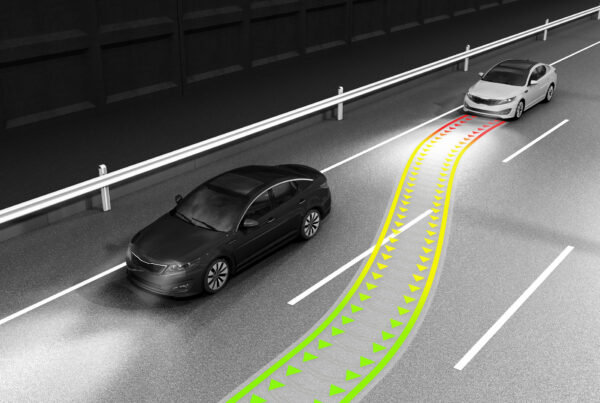
The lane departure prevention system performed well, helping prevent the M9 from leaving its lane or moving into the path of an oncoming or overtaking vehicle or motorcycle.
Low-speed collision avoidance was also good, while the AEB system helped avoid a pedestrian when travelling forwards and could prevent unintended forward acceleration towards a pedestrian caused n pedal-misapplication scenarios.
The M9 also includes a cyclist dooring system, although ANCAP found that its warning was issued too late to meet scoring requirements.
Safe Driving features assessed
The M9 recorded a 75 per cent score for Safe Driving. The vehicle includes seatbelt reminders for all seats and can recognise the size of front-seat occupants to adjust restraint system operation. It can also detect incorrect seatbelt use.
A child presence detection system can alert the driver if a child has been left in the vehicle and activate the air-conditioning.
The driver monitoring system performed well at detecting common forms of distraction, although its ability to identify fatigue or an unresponsive or impaired driver was less comprehensive.
During ANCAP’s on-road assessment, the M9 correctly identified 66 per cent of speed-speed limit changes, equivalent to 94 per cent of the distance driven.
Adaptive cruise control performed well when detecting and responding to other vehicles, motorcycles, pedestrians and cyclists, although it could not adapt when approaching features such as roundabouts and intersections.
The vehicle also provides steering assistance to help maintain its position within the intended lane at speeds up to 100 km/h.
Child restraint limitations
ANCAP identified a limitation for families using the M9’s third row. Lower ISOFIX anchorages and top-tether anchorages are provided for the second-row outboard seats and the left third-row seating position. While all selected child restraints could be fitted in the second row, most could not be correctly installed in the left third-row position.
Child restraints should not be used in the centre or right-hand third-row seats because top-tether anchorages are not provided in those positions.
ANCAP Chief Executive Carla Hoorweg said the M9 added another five-star option to the people mover segment.
“The BYD M9 offers balanced safety performance and introduces fresh five-star choice into the People Mover segment,” Hoorweg said.
The M9 was introduced to Australia and New Zealand in the third quarter of 2026, with the five-star rating applying to seven-seat variants. The rating was assessed in 2026 against ANCAP’s 2026–2028 criteria and is listed as expiring in December 2034.
Download the full BYD M9 safety report.
Did you find this article interesting? Click the ‘heart’ button above to give it a like!