The Indonesian government announced that it will no longer provide incentives for completely built up (CBU) battery electric vehicles (BEV) starting in 2026. Consumers and manufacturers have until the end of 2025 to take advantage of import duties and luxury goods sales tax exemptions.
The Ministry of Industry will cease issuing import permits for CBU BEVs, according to its minister Agus Gumiwang Kartasasmita. This shift in policy creates an opportunity for manufacturers to produce their vehicles within Indonesia instead. This was confirmed by Director-General of the Metal, Machinery, Transport, and Electronics Industry (ILMATE), Setia Diarta.
FOREIGN INVESTMENTS
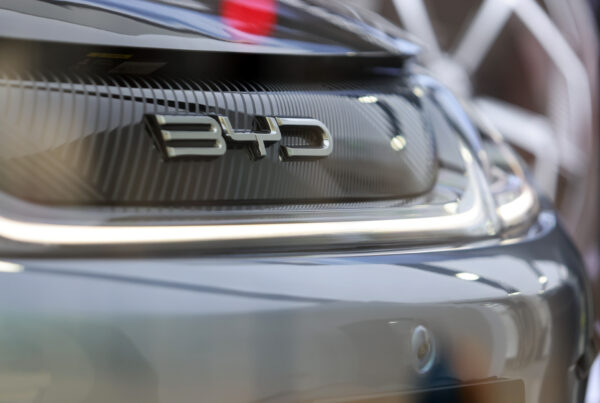
The archipelago is keen to position itself as a global EV hub, welcoming BYD and its first factory in the Southeast Asian region. BYD’s Indonesia plant is set to start production in 2026 with a production capacity of 150,000 units per year. The Chinese EV maker also partnered with the Indonesian government to install a network of BEV charging ports around the country.
Earlier this year, VinFast reportedly delivered a fleet of 300 VF 3 models to dealerships across Indonesia. This delivery was seen as a significant step in Indonesia’s shift to EVs.
BYD and VinFast are two of six companies reaping the benefits of these tax benefits. All six companies are reported to have a total committed investment of IDR 15.52 trillion or AUD 1.43 billion. Collectively, they also have a total production capacity of 305,000 units per year. Starting next year, however, these companies must begin producing their BEVs locally and comply with Indonesia’s local content requirements.
Legacy brands Toyota and Honda are in the process of integrating local EV and hybrid production in Indonesia.
TKDN Requirements
Indonesia has a local EV production and higher domestic content policy also known as TKDN. Starting 2026, BEVs produced locally must include at least 40% local content. From 2027 to 2028, this percentage increases to 60 per cent to push “deeper supply chain integration.” By 2030, Indonesia will require at least 80 per cent local content.
CONSUMER IMPACT
According to AutoIni, there is potential for buyers to enjoy special end-of-the-year deals from auto manufacturers. However, once the incentives end, imported EVs will become pricier as locally assembled EVs become cheaper.
Did you find this article interesting? Click the ‘heart’ button above to give it a ‘like’!