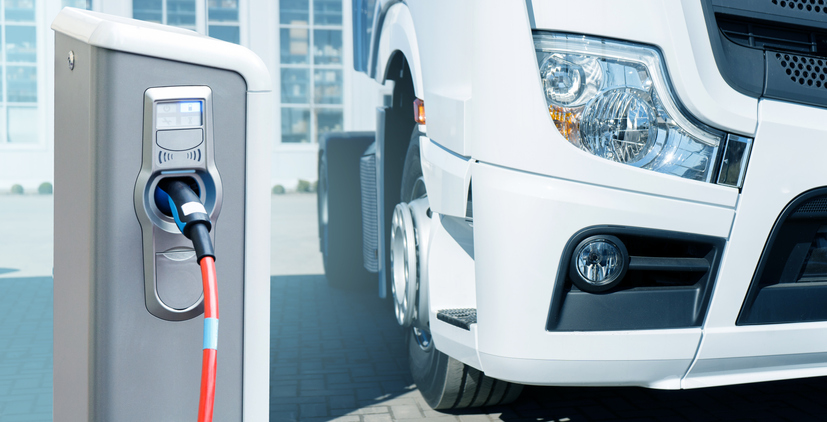
Chinese battery manufacturer CATL has unveiled a dual-battery system for heavy-duty electric trucks, designed to improve battery utilisation and support the electrification of road freight.
The system combines a chassis-mounted swappable battery with a smaller range-extension battery positioned behind the cab. According to CATL, the design aims to address a limitation of existing battery-swapping trucks, where drivers often return to swap stations with about 30 per cent charge remaining.
Improving battery utilisation
CATL says drivers can be reluctant to run batteries down to low charge levels before swapping them, resulting in unused capacity. The company’s new system is designed to increase the main battery’s depth of discharge (DoD) from about 70 per cent to more than 95 per cent.
When the main battery’s charge runs low, the system switches power supply to the range-extension battery within milliseconds, maintaining a continuous power supply.
The initial configuration pairs a swappable battery with a 77kWh range-extension battery capable of charging up to 3C. CATL’s broader “1+X” architecture will allow the secondary battery to be customised for different operating conditions, including high energy density, cold climates and high-power requirements.
The two batteries can also be developed and upgraded independently to meet their respective technical and operational needs.
New battery options and swapping infrastructure
The announcement also included two standardised swappable batteries from CATL subsidiary QIJI. The new 260# battery offers 432kWh of capacity, while the 300# provides 513kWh. They join the existing 75# battery, which has a capacity of 171kWh.
QIJI says its system can complete a battery swap in about five minutes, with a first-swap success rate of 99.99 per cent.
CATL aims to have 900 stations operating by the end of 2026 and plans to expand the network to 2,000 by 2027.
Implications for heavy vehicle fleets
For heavy vehicle operators, the dual-battery approach could help improve battery utilisation while retaining the operational advantages of swapping depleted batteries for charged ones.
Battery swapping can reduce the time vehicles spend waiting for charging, while a secondary battery may provide greater flexibility in how the main battery is used. However, the system’s commercial value will depend on factors such as infrastructure availability, battery costs, operating requirements and compatibility with fleet duty cycles.
Did you find this article interesting? Click the ‘heart’ button above to give it a like!