The Federal Government has unveiled a $400 million heavy vehicle reform package aimed at cutting red tape, improving freight productivity and accelerating the rollout of zero-emission trucks across Australia. The reforms are expected to boost the nation’s economy by up to $4.4 billion annually.
National reforms to improve freight efficiency
The reform package will encourage states and territories to implement nationally consistent heavy vehicle access rules, strengthen driver competency frameworks and support the expansion of heavy zero-emission vehicles. Funding will be tied to jurisdictions delivering the agreed reforms through the National Productivity Fund.
The announcement follows the release of a Productivity Commission report examining the economic impact of heavy vehicle reform, which was commissioned by Treasurer Jim Chalmers and publicly released on 14 August.
Industry groups welcome the announcement
Heavy Vehicle Industry Australia (HVIA) described the reforms as a significant step towards improving freight efficiency, economic productivity and supply chain resilience.
HVIA Chief Executive Todd Hacking said the announcement acknowledged the central role the heavy vehicle sector plays in Australia’s economy.
“HVIA welcomes the government’s commitment to work with states and territories to deliver these reforms and unlock benefits for businesses, consumers and supply chains right across Australia,” Mr Hacking said.
He added that freight productivity extends far beyond the transport sector.
“Freight productivity is not just a transport issue. It is a cost-of-living and economic competitiveness issue,” he said.
According to HVIA, improving road access for high-productivity and zero-emission vehicles could reduce congestion, strengthen supply chains, and lower costs by enabling operators to move the same amount of freight with fewer trips.
Access reforms could remove long-standing barriers
One of the key elements of the package is the acceleration of the National Automated Access System (NAAS), which aims to simplify heavy vehicle access approvals and reduce the industry’s reliance on permits.
The Australian Trucking Association (ATA) said the current system places a significant administrative burden on operators, with the National Heavy Vehicle Regulator processing about 197,000 permit applications each year.
ATA Chair Mark Parry said the reforms would reduce transport costs while improving productivity.
“The Government’s announcement recognises that increasing productivity is the key to reducing the cost of living for families and reducing transport costs for Australia’s exporters,” Mr Parry said.
He pointed to A-double combinations as an example, noting that they can move the same amount of freight in half the number of trips while using 72 per cent of the fuel required by conventional semitrailers.
Electric trucks set to benefit from the reforms
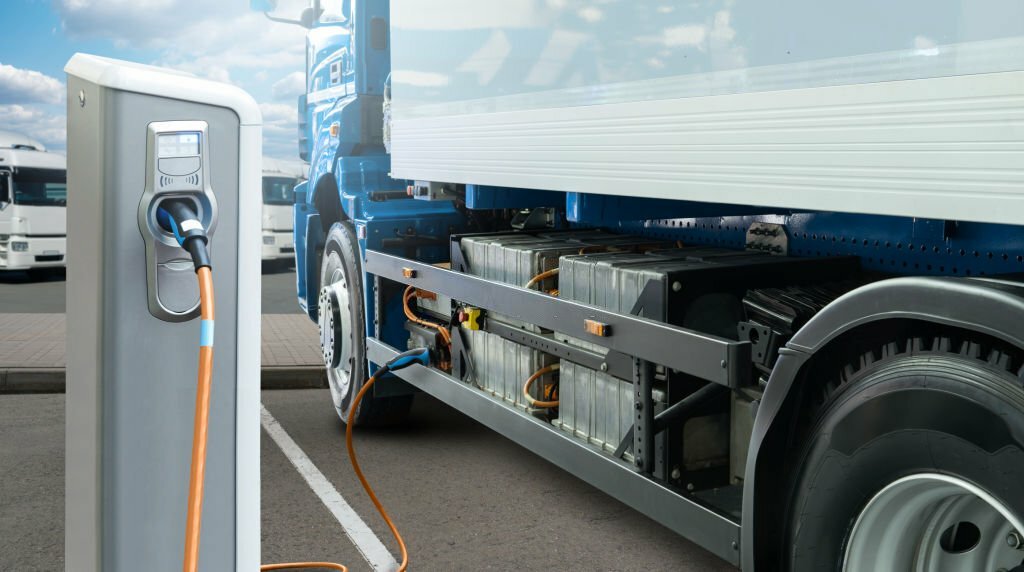
The package also seeks to address regulatory barriers that have slowed the adoption of electric trucks, including access restrictions, vehicle mass limits, charging infrastructure, and curfews.
The Electric Vehicle Council (EVC) welcomed the reforms, describing them as a major opportunity to expand Australia’s clean freight sector.
EVC Chief Executive Julie Delvecchio said electric trucks could improve both productivity and fuel security.
“We’ve long been saying electric trucks deliver productivity and fuel security for the nation. Every electric truck on the road is one less truck relying on imported diesel,” Ms Delvecchio said.
Electric trucks currently account for less than one per cent of heavy vehicle sales in Australia, with operators continuing to face a patchwork of road access rules, charging limitations and noise restrictions.
Driver licensing changes also on the agenda
The reforms will also encourage changes to truck driver licensing by placing a greater emphasis on experience and competency rather than simply the amount of time a licence has been held.
Under the current system, drivers must wait a set period before progressing to larger vehicle classes, regardless of how much practical experience they have gained behind the wheel.
The proposed changes would allow drivers to advance more quickly by recording driving hours and participating in coaching programmes, a move the ATA says could also help address ongoing driver shortages.
Did you find this article interesting? Click the “heart” button above to give it a like.