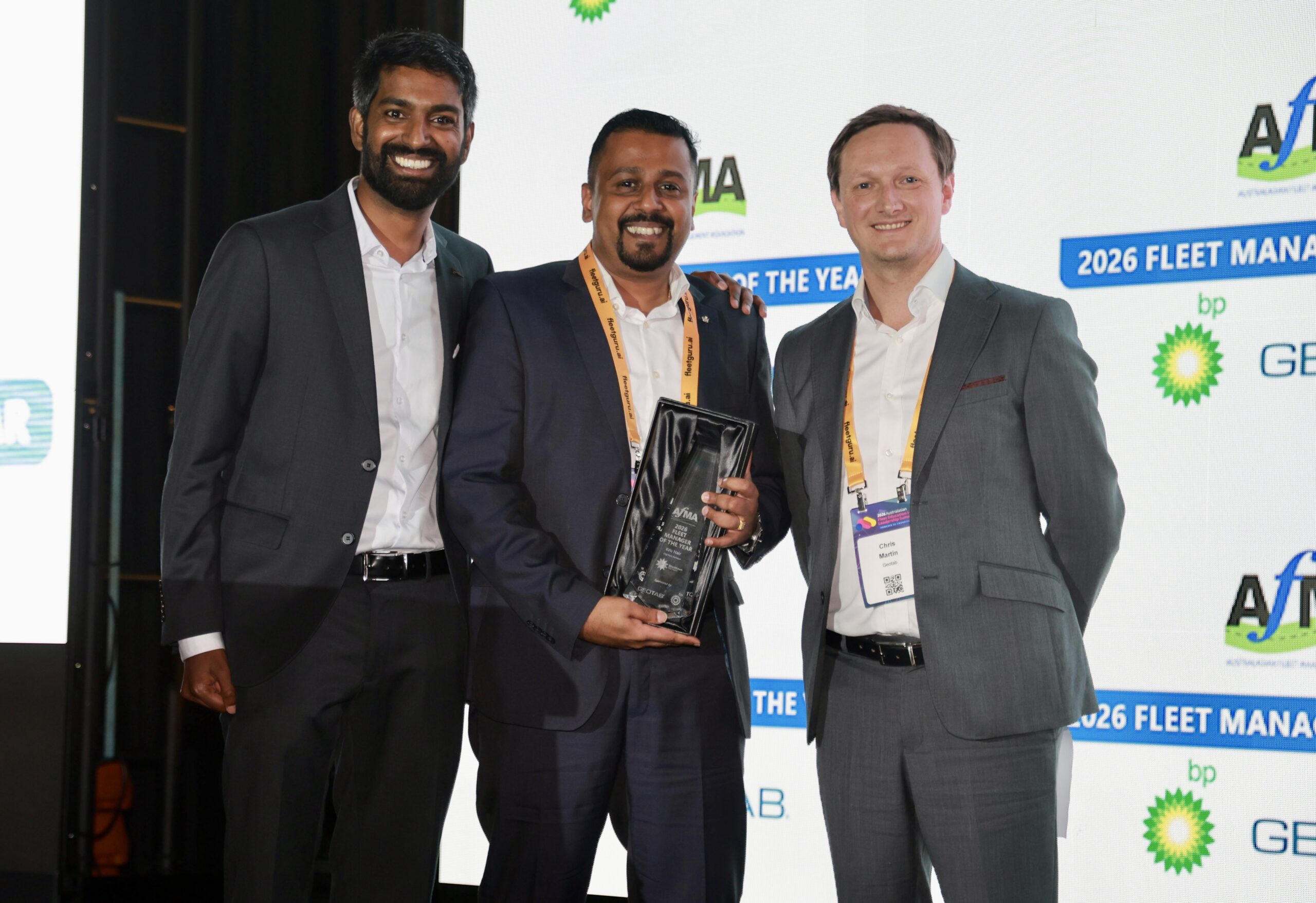
When Kris Nair joined Blacktown City Council (BCC) as the Manager of City Fleet & Energy, he faced several challenges and opportunities. First, its large fleet of diesel vehicles was aging and unable to keep up with organisational emissions targets. Second, wear and tear over time pushed operational and maintenance costs, directly increasing downtime and reducing service reliability. Finally, its business model was reactive and cost-centred, with decisions based on limited data.
To tackle these issues, Kris leaned on his 24 years of fleet management and engineering experience. He relied on three pillars to guide him through his renaissance program; optimisation, sustainability, and data-driven decisions.
Putting philosophy into action
Kris’ transformational achievements with BCC fleet underscore his experience in, passion for, and philosophy of fleet. An experienced fleet manager, Kris oversaw maintenance and delivery fleet services for the state of New South Wales for over 20 years before joining Blacktown City Council.
He holds several degrees including a Global Executive MBA from the University of Sydney Business School, a Certificate in Managing the Human Side of Digital Disruption from MIT Sloan School of Management, and a Master of Engineering.
According to Kris himself, his goal in the fleet industry is to “deliver high quality services and infrastructure to the community while ensuring energy efficiency and environmental sustainability.”
He believes that to redefine fleet management, an integrated framework must be based on three pillars: optimisation, sustainability, and data-driven decisions. These pillars were applied to his overhaul of BCC’s leaseback fleet.
Establishing a foundation
Before laying out a plan, Kris made a comprehensive diagnosis of BCC’s entire fleet. Based on his findings, he created a robust baseline that allowed for thorough identification of any underutilised assets and additional opportunities.
His framework, based on his three pillars, included plans to integrate fleet optimisation, electrification of the BCC fleet, lifecycle planning, and telematics-driven data intelligence.
To fully utilise and optimise BCC’s fleet, Kris focused on overhauling the company’s asset allocation. BCC initially used a decentralised, ownership-based model, reducing the fleet’s utilisation efficiency. To address this, Kris sought to transition the 284-vehicle fleet to becoming a strategic asset instead of just an operational one, supporting the organisation’s operational, financial, and sustainability goals.
Before beginning
Though he had laid out his plan, Kris’ journey to transforming the BCC fleet was not without its challenges. He first had to address a common company culture issue, the resistance to change. For a long time, BCC relied on a diesel fleet with a decentralised ownership model. This meant ownership of certain vehicles were distributed among departments, creating a gap in utilising BCC’s entire fleet.
Kris’ goal to electrify the BCC fleet was also met with challenges. Infrastructure and available technology available to them at the time was limited, including charging ports. BCC also needed to invest in depot electrical upgrades and other EV supporting infrastructure.
Furthermore, data visibility from the BCC fleet was insufficient and inconsistent. Financial constraints influenced current circumstances to have an imbalance within its budget. Kris aimed for a balanced capital investment with budget pressures, making sure not to disrupt any critical services provided by the fleet.
Creating the framework
To slowly integrate his solutions onto the current fleet, Kris used a phased, data-driven transformation approach. He emphasised early engagement and transparent communication, allowing for a collaborative redesign of fleet allocation models.
Solutions
Heavy EV adoption called for staged infrastructure deployment and controlled pilot projects. This deployment was supported by collaborations with OEMs, real-world testing, and targeted workforce training. To unify fleet data and resolve data visibility issues, BCC adopted standardised telematics and centralised fleet intelligence platform. Finally, to ease financial constraints, a reinvestment model required the optimisation savings funded the fleet’s EV transition and innovation.
Implementation
The framework was implemented in phases for Kris to ensure continuity of service while allowing both legacy and newly installed systems to operate simultaneously. Furthermore, the framework was highly structured and evidence based, referring to the comprehensive fleet diagnosis made in earlier stages.
Results
Kris’ framework resulted in a positive impact across several areas of BCC. Fleet was no longer a transactional service but realigned as a strategic asset without intervening with service delivery.
Thanks to Kris’ optimisation initiatives such as asset rationalisation, pooled vehicle models, and data-driven reallocation, fleet utilisation efficiency rose by 20%.
The reinvestment model resulted in an 8-10% decrease in the total cost of ownership for BCC’s light fleet, with around AUD $2 million avoided in capital expenditure. Lifecycle planning, reduced surplus assets, and effective procurement due to electrification
The electrification of the BCC’s entire leaseback fleet resulted in reduced energy cost of 40-60% per kilometre, with up to $2,400 per year per vehicle in operating savings. A further 30-50% of servicing and maintenance costs were saved due to the phase out of the fleet’s ICE vehicles.
Half of BCC’s leaseback fleet was successfully replaced with EVs and PHEVs. The adoption of EV saved 1.6 tonnes of CO2 per vehicle per year, while PHEV adoption saved 0.8 tonnes of CO2 per vehicle per year.
Kris’ overall transformation of BCC’s fleet and its operations have conclusively improved efficiency and utilisation while reducing costs. In addition to operational improvement, thanks to Kris’ solution framework and its implementation, BCC’s fleet has become more sustainable, low-emission, and future-proof. It is no longer a mere asset meant only for service deliveries, but a strategic one that aligns itself with the organisation’s overarching goals.